
AI Background Music for Restaurants, Cafes and Retail Stores
The music playing in a cafe, restaurant, or shop is never just background noise. It sets the pace people walk, the way they linger, and how they remember the place. Yet for most small business owners, sorting out legal music is a headache of licenses, monthly fees, and confusing rules. This guide shows how ambient AI music avoids much of that, and how to build a custom soundtrack with Kleep that you can use commercially.
Why licensed background music is so expensive and complicated
Playing music in a public business is not the same as playing it at home. The moment a track becomes part of a customer's experience, it usually falls under public performance rules, and that is where the costs and paperwork begin.
Most owners run into some version of the same trap:
- Multiple licenses at once - the rights to a popular song are often split between the songwriter, the performer, and the label, and a single track can require more than one agreement.
- Recurring monthly fees - commercial streaming services and licensing bodies charge ongoing rates that grow with your square footage, speakers, or number of locations.
- Real legal risk - playing a personal streaming account or a phone playlist in your venue can lead to fines, because those services are licensed for private use only.
- Zero ownership - after years of paying, you own nothing. Stop paying and the music stops with you.
For a small cafe or boutique, that is a lot of friction just to have pleasant sound in the room.
How ambient AI music avoids the licensing headache
AI music changes the equation because the track is generated fresh for you rather than pulled from a famous artist's catalog. There is no famous artist, label or publisher behind it standing between you and the speaker.
With Kleep, the songs you generate are royalty-free, with no per-play fees to Kleep. You describe the mood you want, the AI composes an original track, and you can play it in your space. Kleep assigns you any rights it holds in your songs, and commercial use is allowed on every plan, including free credits. Purely AI-generated music may not be protected by copyright, and uniqueness is not guaranteed (terms). Public-performance rules differ by country, so check whether a local collecting society has requirements for music played in your venue. More in our guide to commercial use of AI music.
The goal is not to replace your favorite band. It is to fill the room with sound that feels right, sounds professional, and does not depend on someone else's catalog.
That matters. A custom instrumental you generate and download today keeps playing next year with no per-play meter running. MP3 download comes with Premium, or for 30 days after buying a credit pack (credits and Premium).
Matching the music to your atmosphere and time of day
Great venue music is not one playlist on repeat. The right sound shifts with the room, the crowd, and the hour. Think about the feeling you want customers to have the moment they walk in.
A simple way to map sound to your day
- Morning - soft acoustic guitar, gentle piano, or warm lo-fi to ease people into the day over coffee.
- Midday rush - slightly brighter, mid-tempo tracks that keep energy up without rushing anyone out.
- Afternoon lull - mellow, unobtrusive instrumentals that let conversation lead.
- Evening - warmer, richer tones for dinner service, or upbeat grooves for a livelier bar crowd.
A retail store follows the same logic. A calm boutique wants sound that slows browsing and invites people to touch, try, and stay. A high-energy sneaker shop wants a beat that makes the space feel current and alive. Match the tempo to the pace you want your customers to move.
Building long playlists and seamless loops
A single two-minute song will drive everyone crazy by the third repeat. The trick to a professional feel is variety within a consistent mood, so the sound stays fresh while the atmosphere stays stable.
- Pick one core mood - for example, warm acoustic morning cafe. This becomes the thread that ties everything together.
- Generate many variations - create ten, twenty, or more tracks in that mood, changing the instrument, tempo, or feel slightly each time. Each creation costs 5 credits and returns two versions, so Premium's monthly refill to 150 credits covers 30 creations, about 60 tracks.
- Order them into a set - arrange your generated songs into a long playlist that can run for a full shift without an obvious repeat.
- Refresh seasonally - add a handful of new tracks every few weeks so regulars never feel like they are hearing the exact same loop.
Because each generation is fast and low cost, building a multi-hour library is realistic even for a one-person business. You are assembling your own soundtrack rather than renting someone else's catalog.
Building a brand identity through sound
The best venues sound like themselves. A consistent musical identity works the same way as a logo or a color palette - it makes your space instantly recognizable and quietly memorable.
Decide what your brand should feel like, then keep your music inside that lane. A specialty coffee roaster might commit to warm, organic, acoustic textures across every track. A modern nail bar might lean into clean, minimal electronic sound. When the mood stays consistent, customers start to associate that feeling with you, even if they never notice the music consciously.
You can push this further by generating a short signature track for moments that matter, such as an opening jingle, a track that plays near the register, or a theme for your social videos. Having your own sound means you can use it everywhere your brand shows up.
How to generate a cafe or store playlist in Kleep
Here is the practical path from an empty room to a full-shift soundtrack of your own.
- Define your vibe. Write down three words for your space, such as warm, calm, welcoming, or bold, modern, energetic.
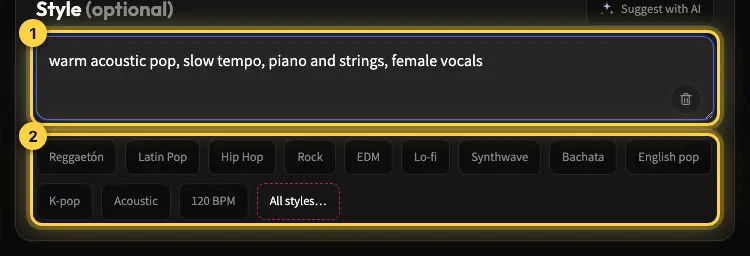
- Open the creator. Go to the Create page and describe your first track, for example "relaxed instrumental lo-fi for a morning cafe, soft piano and light beats, no vocals." Our prompt writing guide has more examples.
- Choose instrumental where it fits. For most venues, vocal-free tracks sit better under conversation, so lean toward instrumental sounds for the main playlist.
- Generate variations. Keep the mood fixed and change one detail at a time to build a family of tracks that belong together.
- Organize into playlists. Every creation is saved to your library automatically; add the versions you love to a playlist for each part of the day (library and playlists).
- Play and refine. Run it in your space, notice what fits and what does not, and generate replacements until the room sounds exactly right.
Commercial use, including playing tracks in your business, is allowed on every plan. Browse the Explore page for mood ideas, check the pricing options when you are ready to build a large library, and open the Create page to generate the first track for your space. For more tips, keep reading the Kleep blog.
Frequently asked questions
Can I play Spotify or my personal playlist in my cafe or shop?
Usually not. Personal streaming accounts are licensed for private listening, and once music becomes part of a customer's experience it falls under public performance rules. Playing a personal account in a venue can lead to fines from licensing bodies. Businesses either pay commercial streaming and performance fees, which grow with square footage, speakers, and locations, or use original music they generated themselves, after checking local public-performance rules.
Is AI-generated background music royalty-free for a restaurant or store?
Royalty-free, yes, when you generate it yourself: there is no famous artist, label, or publisher behind the track, and Kleep charges no per-play fees. Commercial use, including in your business, is allowed on every Kleep plan. Public-performance rules vary by country, so check whether a local collecting society has requirements for your venue. Once downloaded, the music keeps playing next year with no per-play meter running.
How many tracks do I need for a full shift without repeats?
Plan for hours, not minutes. A single two-minute song becomes irritating by the third repeat, so build a library of ten, twenty, or more tracks per mood and arrange them into a long set. Keep the mood fixed and change one detail at a time, such as the lead instrument, tempo, or feel, so the set stays consistent. Add a handful of new tracks every few weeks so regulars never hear the exact same loop.
What music should a cafe play in the morning versus the evening?
Mornings suit soft acoustic guitar, gentle piano, or warm lo-fi that eases people into the day. The midday rush wants slightly brighter mid-tempo tracks that keep energy up without rushing anyone out. The afternoon lull calls for mellow, unobtrusive instrumentals that let conversation lead. Evenings work with warmer, richer tones for dinner service or upbeat grooves for a lively bar crowd. Match the tempo to the pace you want customers to move.
Should background music for a store or restaurant have vocals?
For the main playlist, mostly no. Instrumental tracks sit better under conversation and let people browse or talk without competing lyrics, so turn on the instrumental option when generating. Vocals can work for a short signature piece, such as an opening jingle or a track that plays near the register, but keep the everyday set vocal-free and unobtrusive so it never pulls attention from the room.
How do I make my venue's music sound like my brand?
Decide what the brand should feel like in three words, then keep every track inside that lane. A specialty roaster might commit to warm, organic acoustic textures, while a modern nail bar leans into clean, minimal electronic sound. When the mood stays consistent, customers associate that feeling with you even if they never notice the music. Add a short signature track for moments that matter, like opening time or your social videos.
About the author
Kleep Editorial TeamAI music guides and product team
The Kleep editorial team builds and tests Kleep's AI song generator every day and writes practical, hands-on guides to creating songs with AI in English and Hebrew.
Keep reading
Free AI Music for Commercial Use: Where to Get It and What You Can Do With It
Is free AI music safe for your business videos, ads and content? This guide explains commercial use plainly and shows how to make original tracks with Kleep.
How to Create Music for a Commercial Without Paying for a Studio
Produce social and web ad music with AI: match your brand and ad length, use it commercially, and skip the studio. A practical step-by-step guide.
Music for a Corporate Promo Video: How to Choose and Create a Custom Soundtrack
Score your company profile video: match music to your brand values, sync it to scenes and narration, skip generic stock music, and use it commercially.