
How to Create Meditation, Sleep, and Focus Music with AI (A Practical Guide)
Calm instrumental music is one of the most listened-to categories on the planet. Millions of people press play on it every night to fall asleep, every morning to meditate, and every workday to concentrate. The magic is that this music is deliberately simple - which is exactly why AI is so good at making it. You do not need to be a composer to produce a beautiful, hour-long ambient bed. This guide explains what makes calming music work, how meditation, sleep, and focus tracks differ, and the exact workflow to create your own with AI.
What actually makes calming music work
Relaxing music is not just quiet music. It follows a handful of principles that keep the listener's nervous system settled instead of alert. Once you understand these rules, you can prompt for them on purpose rather than hoping the result feels calm.
The traits that separate genuinely soothing tracks from background noise are consistent:
- Slow, steady tempo - roughly 50 to 70 beats per minute, close to a resting heart rate, so the body relaxes toward it.
- No jarring transitions - sounds fade in and out gently, with no sudden drops, key changes, or percussive hits that snap attention back.
- Instrumental only - lyrics pull the analytical brain in; wordless pads, piano, and textures let the mind drift.
- Long duration - real relaxation needs continuity, so these tracks run for many minutes without an obvious ending.
- Warm, spacious tone - soft reverb and low, rounded frequencies feel safe; harsh highs feel like an alarm.
The best calming music is barely noticeable. If a listener keeps noticing it, it is doing too much.
Meditation vs. sleep vs. focus: three different jobs
People lump these three together, but they serve different goals and need different textures. Getting the distinction right is the single biggest factor in whether your track works.
- Meditation music supports presence and breathing. It often uses sustained drones, singing-bowl-like tones, and slow swells that give the mind something gentle to rest on without telling a story.
- Deep sleep music is the most minimal of the three. It removes almost all movement and melody, leaning on soft low-frequency pads and near-silence so nothing keeps the brain engaged as it winds down.
- Focus and study music can carry a little more motion - a quiet, repetitive pulse and light rhythm that mask distractions and hold a steady, non-intrusive energy without ever demanding attention.
A useful rule of thumb: sleep removes energy, meditation holds a soft and even energy, and focus adds a gentle forward pulse. When you brief the AI, name the job first and the sound second.
How to prompt AI for calm instrumental beds
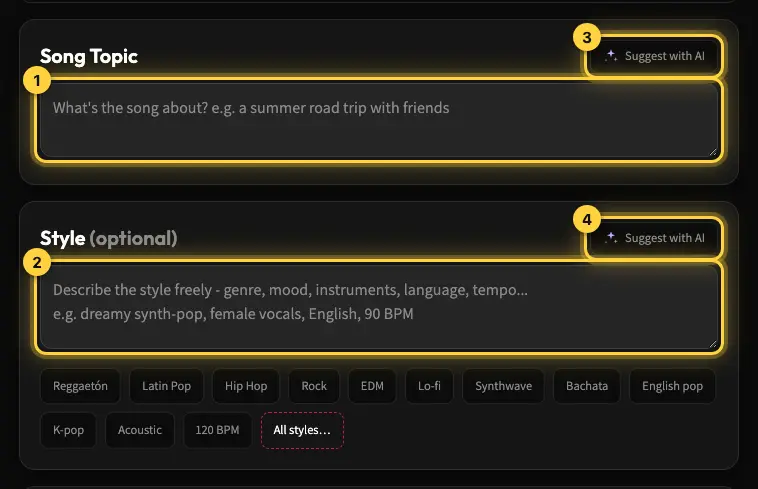
The prompt is where most calm-music attempts go wrong. People ask for something vaguely relaxing and get a track with a dramatic build. Be specific about mood, instruments, tempo, and what to leave out. Head to Kleep and describe the atmosphere in plain language.
Strong prompts share a few habits:
- Name the instruments. Soft piano, warm synth pads, gentle strings, ambient textures, distant bells - concrete choices give a concrete result.
- State the tempo and energy. Ask for slow, gentle, and flowing, and write a low tempo such as around 60 BPM straight into the style description.
- Say what to avoid. Explicitly rule out drums, sudden changes, big builds, and vocals so the track stays even throughout.
- Set the emotional target. Words like peaceful, weightless, warm, and dreamy steer the mood more reliably than genre names.
- Keep it instrumental. Switch on the Instrumental (no words) option and make clear there should be no spoken word, only atmosphere.
Not sure how a style translates into sound? Browse Explore to hear ambient and calm tracks other people have made before you commit to a direction, and see styles and voices for how the Style field works.
Step by step: create your calm track
Here is a simple workflow that takes you from a blank page to a finished, loopable ambient track. Open the create page and work through these steps:
- Choose the job. Decide up front whether this is for meditation, deep sleep, or focus - it changes every choice that follows.
- Write a calm, specific prompt. Describe the instruments, the slow tempo, the warm mood, and the things to avoid, as covered above.
- Compare the two versions. Each creation costs 5 credits and returns two versions; listen to both with your eyes closed. The calmest option is rarely the most impressive on first listen.
- Pick the smoothest section. Choose the passage with the most even, uninterrupted flow - that is your core loop material.
- Extend into a long loop. Download the MP3 (MP3 download comes with Premium, or for 30 days after buying a credit pack; see credits and Premium) and, in any audio editor, repeat and layer the section so the track runs long enough for its purpose - 10 minutes for focus, far longer for sleep.
- Test it in real conditions. Play it while you actually work, meditate, or lie down, and cut anything that pulls your attention.
The test at the end matters most. Calm music can only be judged in the situation it is made for, not while you are concentrating on editing it.
Building long loops that never distract
Duration is what turns a nice clip into usable relaxation music. A 90-second sample is not enough for a meditation session or a night of sleep, so the goal is length that feels continuous rather than obviously repeated.
A few techniques keep long tracks smooth:
- Choose source material with no strong beginning or end, so joins are invisible.
- Overlap and crossfade repeats instead of cutting them cleanly together.
- Let subtle variations drift in and out so the loop never feels mechanical.
- Keep the volume even across the whole length, with no section louder than the rest.
- Aim for the right runtime per use: minutes for focus, tens of minutes or more for sleep.
Where calm music pays off - and what you may do with it
Once you can make this music on demand, the uses add up quickly. Kleep assigns you any rights it holds in your songs, and commercial use is allowed on every plan, including free credits. Purely AI-generated music may not be protected by copyright, and uniqueness is not guaranteed (terms). That means you can publish and monetize the tracks without paying per-track licensing fees; our guide to commercial use of AI music covers the details.
Common places this music earns its keep:
- Long-form ambient and sleep channels on YouTube and streaming platforms.
- Meditation, sleep, and wellness apps that need a library of original beds.
- Personal routines - your own focus playlist, bedtime wind-down, or breathing practice.
- Spas, clinics, yoga studios, and waiting rooms that want calm background loops.
- Content creators who need royalty-free music under videos and podcasts.
One caution for channels: YouTube's monetization policies do not reward repetitive or mass-produced content, so a channel of near-identical AI loops may not qualify for monetization. Give each upload a distinct purpose and real variety, and read the platform's current policies before you build a channel around this music.
Premium refills your balance to 150 credits each month, which is 30 creations (60 versions); see the pricing page for plans and credit packs. Collect your favorite tracks into a playlist for a focus session or bedtime. When you are ready, open Kleep to create your first calm track.
Frequently asked questions
What tempo should meditation or sleep music be?
Roughly 50 to 70 beats per minute, close to a resting heart rate, so the body relaxes toward it. Tempo is only part of it, though: genuinely soothing tracks also avoid jarring transitions, stay instrumental, run long enough to feel continuous, and keep a warm, spacious tone with soft reverb and rounded low frequencies. Harsh highs and sudden percussive hits read as an alarm to the nervous system.
What is the difference between music for meditation, deep sleep and focus?
They do three different jobs. Meditation music holds a soft, even energy with sustained drones, singing-bowl-like tones and slow swells that support breathing. Deep sleep music removes almost all movement and melody, leaning on low-frequency pads and near-silence. Focus music adds a gentle forward pulse, a quiet repetitive rhythm that masks distractions without demanding attention. When you prompt, name the job first and the sound second.
How do I prompt AI for calm ambient music without a dramatic build?
Be specific about what to include and what to leave out. Name the instruments (soft piano, warm synth pads, gentle strings, distant bells), state a slow tempo and low energy, set the emotional target with words like peaceful, weightless or dreamy, and explicitly rule out drums, sudden changes, big builds, vocals and spoken word. Vague requests for "something relaxing" are what produce tracks that swell into a climax.
How do I make a 10-minute or hour-long loop from a short AI-generated track?
Pick the passage with the most even, uninterrupted flow as your core loop material, ideally one with no strong beginning or end so the joins are invisible. Overlap and crossfade the repeats instead of cutting them together, let subtle variations drift in and out so it never feels mechanical, and keep the volume even across the whole length. Aim for around 10 minutes for focus and far longer for sleep.
How can I tell whether my calm track actually works?
Test it in the situation it was made for. Play it while you actually work, meditate or lie down, not while you are concentrating on editing it, and cut anything that pulls your attention. When comparing takes, listen with your eyes closed; the calmest option is rarely the most impressive on first listen. If a listener keeps noticing the music, it is doing too much.
Can I publish AI-generated sleep music on YouTube or in a meditation app?
Yes. Commercial use is allowed on every Kleep plan, so you can publish and monetize the tracks without per-track licensing fees. Uniqueness is not guaranteed, and platforms set their own rules for AI music and for repetitive or mass-produced uploads, so review them before you publish. Common outlets include long-form ambient and sleep channels, meditation and wellness apps that need a library of original beds, spas, clinics and yoga studios, and creators who need royalty-free background music under videos and podcasts.
About the author
Kleep Editorial TeamAI music guides and product team
The Kleep editorial team builds and tests Kleep's AI song generator every day and writes practical, hands-on guides to creating songs with AI in English and Hebrew.
Keep reading
Free AI Music for Commercial Use: Where to Get It and What You Can Do With It
Is free AI music safe for your business videos, ads and content? This guide explains commercial use plainly and shows how to make original tracks with Kleep.
How to Create Music for a Commercial Without Paying for a Studio
Produce social and web ad music with AI: match your brand and ad length, use it commercially, and skip the studio. A practical step-by-step guide.

Music for a Corporate Promo Video: How to Choose and Create a Custom Soundtrack
Score your company profile video: match music to your brand values, sync it to scenes and narration, skip generic stock music, and use it commercially.