
Turn Your Own Lyrics into a Finished Song: What to Do When You Already Have the Words
Plenty of people already have the words - a poem written years ago, a letter never sent, lyrics scribbled in a notes app at 2am. What they do not have is a melody, an arrangement, or a way to actually hear it as a song. If that describes you, the words are the hard part and you have already done it. This guide covers exactly what to do next.
Your lyrics are not automatically "song-ready"
A poem and a song lyric are close cousins, but not identical. Poems can wander; songs generally need repetition, a clear structural rhythm, and moments the ear can anticipate. Before feeding your text into a generator, it helps to look at what you have with a songwriter's eye rather than a reader's eye.
That does not mean rewriting everything - most of the time it means small, targeted adjustments.
Checklist: preparing your lyrics before you generate
- Find your chorus. Even four unpublished lines, look for the section that carries the emotional core - that becomes your chorus, and it usually benefits from being the section that repeats.
- Break it into clear sections. Label verse and chorus (and bridge, if you have one) directly in your text. This alone dramatically improves how coherent the generated structure feels.
- Watch line length consistency. Wildly uneven line lengths within a verse can make the melody feel unstable. It does not need to be perfect, but reasonably even lines help.
- Cut anything that only works on the page. Some wordplay reads beautifully but is nearly impossible to sing naturally. If a line trips you up reading it aloud, it will trip up the vocal too.
- Decide the emotional tempo. Is this a slow, reflective piece or something that wants energy and drive? Knowing this before you pick a style saves a lot of trial and error.
Step by step: from lyric sheet to finished song
Once your lyrics are structured, head to create and work through this process:
- Switch to Advanced mode and paste your finished lyrics in, with verse and chorus clearly marked.
- Describe the style and mood, not just a genre name - mention instruments, tempo, or a reference feeling ("stripped-back acoustic, late-night, a little sad").
- Create and compare the two versions. Each creation (5 credits) returns two versions, and the same lyrics can come out as very different songs depending on the arrangement - listen to both before deciding.
- Check that the melody serves the words, not the other way around. If a key line gets buried under the arrangement, that is worth a regenerate with adjusted style instructions.
- Refine specific lines if needed. If one section does not sing well, it is often faster to slightly rewrite that section than to keep regenerating the whole song hoping it lands differently.
- Keep the version you love. Every song is saved to your Library automatically. MP3 download comes with Premium, or for 30 days after buying a credit pack.
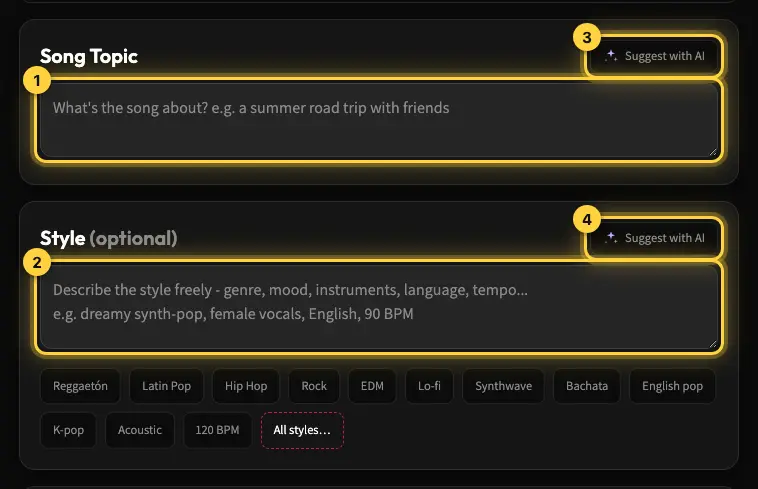
On free credits, songs with lyrics run up to about 2:30, roughly 230 sung words; a long poem may need trimming, or use Premium for longer songs. For the editor itself see the lyrics help article, and for style prompts and fixes after the first listen see how to turn lyrics into a song with AI.
When to keep your lyrics exactly as written
Not everything needs editing. If the words are deeply personal - a eulogy, a proposal, something written for one specific person - it is often better to keep the language exactly as it is and let the arrangement do the adaptive work, rather than smoothing out the parts that make it distinctly yours.
Already read about turning a story into lyrics?
If you are starting from a story or memory rather than finished lyrics, the companion guide on turning a story into a song covers the earlier step of getting from an idea to a full lyric sheet.
You already did the hard part
Writing the words is usually the part people get stuck on. If you have already cleared that hurdle, turning them into a finished, produced song is now a matter of minutes, not months. Head to the Create page and hear your words as a song.
Frequently asked questions
Can I turn a poem I already wrote into a song with AI?
Yes, and the words are the hard part you have already done. A poem is not automatically song-ready, though: poems can wander, while songs need repetition, a clear structural rhythm and moments the ear can anticipate. Read your text with a songwriter's eye, find the lines that carry the emotional core, and make small targeted adjustments rather than rewriting everything. Then paste it into a generator with verse and chorus marked.
How do I find the chorus in lyrics that were never written as a song?
Look for the section that carries the emotional core, the lines you would want a listener to remember. That becomes your chorus, and it usually works best as the part that repeats. Label it, along with the verses and a bridge if you have one, directly in the text. Marking sections this way is the single change that most improves how coherent the generated structure feels.
Does it matter if my lyric lines are different lengths?
Somewhat. Wildly uneven line lengths inside one verse make the melody feel unstable because the arrangement has nothing steady to lock onto. Lines do not need to be perfectly matched, but reasonably even ones help. Also cut anything that only works on the page: if a line trips you up when you read it aloud, it will trip up the vocal too.
What do I type in the style box when I already have the lyrics?
Describe the mood and texture, not just a genre name. Mention instruments, tempo and a reference feeling, for example "stripped-back acoustic, late-night, a little sad". Decide first whether the piece is slow and reflective or wants energy and drive, because knowing that before you pick a style saves a lot of trial and error. Every creation then gives you two versions to compare, since the same words can become very different songs.
The melody buries my most important line. What should I change?
The melody should serve the words, not the other way around. If a key line gets lost under the arrangement, regenerate with adjusted style instructions, for instance asking for a lighter arrangement or a slower tempo. If one section still does not sing well, slightly rewriting that section is usually faster than regenerating the whole song and hoping it lands differently.
Should I edit very personal lyrics, like a eulogy or a proposal, before generating?
Often, no. When words were written for one specific person, the rough edges are part of what makes them yours. In those cases keep the language exactly as it is and let the arrangement do the adaptive work, rather than smoothing out the parts that carry the meaning. Structure marks like verse and chorus still help, but the wording itself can stay untouched.
About the author
Kleep Editorial TeamAI music guides and product team
The Kleep editorial team builds and tests Kleep's AI song generator every day and writes practical, hands-on guides to creating songs with AI in English and Hebrew.
Keep reading
How Kleep Sings Hebrew: Every Layer Between Your Words and the Song
AI music tools were built for English. Every layer Kleep adds for Hebrew: grammar and gender checks, Dicta nikud, phonetic fixes and voice matching.
Creating Religious Music With AI: Niggunim, Piyyutim and Kodesh Songs in Hebrew
Create religious and Jewish music with AI in Hebrew: niggunim, piyyutim, Shabbat and holiday songs, with natural Hebrew pronunciation in minutes.
AI Song Composer: How to Write an Original Melody Without Knowing Any Notes
No need to read music to compose an original song. Use Kleep as your AI composer and turn a mood, theme or a few lines into a full melody in minutes.