
Creating Religious Music With AI: Niggunim, Piyyutim and Kodesh Songs in Hebrew
Religious music carries a weight that ordinary songs do not. A niggun for a Shabbat table, a piyyut for a holiday, a song of thanks for a simcha - these are meant to move people and to last. Until recently, creating original religious music in Hebrew meant hiring a composer and a singer. With Kleep you can build a heartfelt, kosher-in-spirit song from scratch in a few minutes, and this guide shows you how to do it well.
What counts as religious music here
Religious music is a wide field, and the same tool handles all of it. The most common requests we see fall into a few groups:
- Niggunim - wordless or near-wordless melodies for the Shabbat table, a tisch, or personal prayer.
- Piyyutim and songs of faith - original lyrics built around gratitude, emunah, or a verse that means something to you.
- Shabbat and holiday songs - warm, family-friendly tunes for Kabbalat Shabbat, Chanukah, Pesach, or a holiday meal.
- Simcha songs - a bar or bat mitzvah, a wedding, a brit, or a hachnasat sefer Torah, personalized with real names and details.
Because you write the words yourself, the content stays exactly as respectful and as personal as you want it to be.
Step by step: building a religious song
Open the Create page and work through this process:
- Decide the purpose first. A slow, meditative niggun for prayer is a different song from an upbeat holiday tune for the whole family. Naming the occasion up front keeps the melody in the right emotional register.
- Write the words in Hebrew. Typing the lyrics, verses, or names directly in Hebrew keeps the whole song in Hebrew and produces far more natural pronunciation than mixing languages.
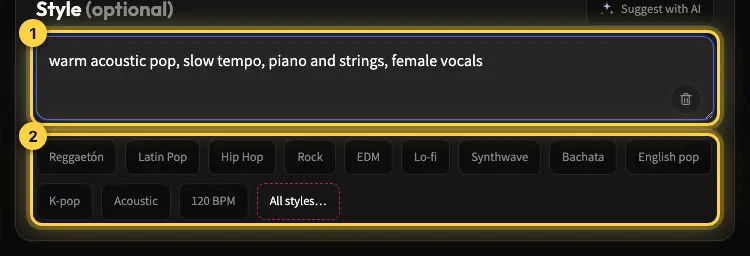
- Choose a fitting style. Describe the vibe in plain words in the Style box - "warm, acoustic, Shabbat table," "slow soulful niggun," or "joyful Chassidic celebration." You can also tap the style chips under the box (on the Hebrew site they include Piyyutim, Prayer and Mizrahi) or open "All styles" for the full library. The style shapes the instruments and the pace.
- Keep sacred phrasing clear. If a specific verse or phrase is the heart of the song, make sure it lands on a clear, singable beat so it stays understandable.
- Compare the two versions. Every creation returns two versions with different melodies. Listen to both before choosing the one that feels right; if neither fits, adjust the wording and create again.
- Finalize and share. The song is saved to your Library automatically. Share its link with family, or play it at the table. MP3 download comes with Premium, or for 30 days after buying a credit pack.
Getting natural Hebrew pronunciation for sacred words
Religious lyrics lean heavily on Hebrew words with guttural endings and traditional phrasing, so pronunciation matters more here than almost anywhere else. A few habits help:
- Let the automatic nikud do its job. Kleep adds nikud to your Hebrew lyrics automatically before the song is sung. Add vowel points yourself only to force the reading of a rare name or an unusual traditional word (Hebrew pronunciation guide).
- Write the way the words are actually said. Lyrics written in natural, spoken Hebrew sing far better than anything translated word-for-word.
- Name the vocal in the Style box. There is no voice picker: write "male vocal" or "female vocal" (or "choir") in Style. Otherwise the singer's gender is matched to the lyrics.
Ideas by occasion
- Shabbat table - a short, repeatable niggun the whole family can join in on by the second verse.
- Chanukah, Pesach, holidays - a warm tune that ties the meal together and becomes a small family tradition.
- Bar / bat mitzvah - a personalized song with the child's name and a verse that fits the parsha or the moment. See the ideas for a bar mitzvah song and a bat mitzvah song.
- Words of gratitude - a personal song of thanks after a recovery, a birth, or an answered hope.
Make one today
An original religious song in Hebrew takes a few minutes to create and can become part of your family's occasions for years. Start now, or explore the Hebrew song generator built specifically for natural Hebrew singing.
Frequently asked questions
Can AI create a niggun or a Shabbat song in Hebrew?
Yes. You describe the purpose, such as a slow meditative niggun for prayer or a warm tune for the Shabbat table, write any words directly in Hebrew, and pick a style in plain language like warm acoustic or joyful Chassidic celebration. The generator composes the melody and vocals in a few minutes. For a niggun with few or no words, the style description does most of the work, so spend a moment describing the pace and the feeling you want.
How do I get correct pronunciation of sacred Hebrew words in an AI song?
Kleep adds nikud automatically, so most words are read correctly without extra work; add vowel points yourself only for a rare name or an unusual traditional word. Write the lyrics the way they are actually spoken instead of translating word for word. If you want a specific singer, write "male vocal" or "female vocal" in the Style box; otherwise the gender is matched to the lyrics. Then compare the two versions each creation returns and pick the one where the key verse lands clearly.
Should I write the lyrics in Hebrew or in English transliteration?
Type them directly in Hebrew. Mixing languages or using transliteration makes the pronunciation drift, because the model then treats the words as foreign text. Keeping every word, verse and name in Hebrew script keeps the whole song in Hebrew and produces far more natural singing. If a specific verse is the heart of the song, phrase it so it falls on a clear, singable beat, so the words stay understandable when sung.
Can I make a personalized song for a bar mitzvah or a wedding with the names in it?
Yes. Simcha songs are one of the most common uses: a bar or bat mitzvah, a wedding, a brit or a hachnasat sefer Torah. Include the real names and details in the lyrics, and for a bar or bat mitzvah you can add a verse that fits the parsha or the moment. Because you write the words yourself, the content stays exactly as respectful and personal as you want it to be.
Which style descriptions work well for religious music prompts?
Plain, specific phrases work best because they set both instruments and pace. Examples that fit different occasions: warm, acoustic, Shabbat table for a family tune; slow soulful niggun for prayer or a tisch; joyful Chassidic celebration for a simcha; and a warm, gentle melody for a song of gratitude after a recovery or a birth. Decide the purpose first, since a meditative niggun and an upbeat holiday song are different songs even with the same words.
How many versions should I generate before choosing a religious song?
Start with one creation: it already returns two versions. Small changes in wording shift the melody, so listen for whether the central verse is clear and singable, and choose the one that fits the occasion emotionally. A Shabbat niggun should be short and repeatable so the family can join in by the second verse; a holiday tune should be warm enough to become a small tradition. Once you have the right take, play it at the table; MP3 download comes with Premium, or for 30 days after buying a credit pack.
About the author
Kleep Editorial TeamAI music guides and product team
The Kleep editorial team builds and tests Kleep's AI song generator every day and writes practical, hands-on guides to creating songs with AI in English and Hebrew.
Create a song for the occasion
Keep reading
How Kleep Sings Hebrew: Every Layer Between Your Words and the Song
AI music tools were built for English. Every layer Kleep adds for Hebrew: grammar and gender checks, Dicta nikud, phonetic fixes and voice matching.
AI Song Composer: How to Write an Original Melody Without Knowing Any Notes
No need to read music to compose an original song. Use Kleep as your AI composer and turn a mood, theme or a few lines into a full melody in minutes.
Creating AI Music for Free in Hebrew: The Complete Beginner's Guide
A start-to-finish guide to creating music with AI in Hebrew for free, no experience needed. From your first prompt to a natural Hebrew song with Kleep.